Posts from 2009 that are no longer in the main list.
Posts from 2009
Technical Difficulties
Sorry about the lack of posts the last few weeks, I have been suffering technical difficulties. Namely, a VERY dead hard disk in my laptop. It died 2 weeks ago, so I repaired it, and it summarily died again 2 days later. So I dumped it on the vendor and went on vacation for a week.
Now that I am back in the office, I have it back and am slowly getting it back up and running. The downside, is that I use client side tools for my blogging, and without the laptop, no updates.
Oh well.
With summer winding down, the kids are getting ready to go back to school, I find myself wondering where the summer went. I did not get nearly the free time I expected this summer, and that translates to alot of 'functional' rides and few 'recreational'. I cannot complain really. Living where we do, even the commute includes some great recreational sites and roads to ride.
This weekend, I was riding to to Lowe's to pick up a could of items I needed for a project around the house. On the way, I had to stop to get this picture on the phone. This is a small group of wild turkeys just wandering near the road. It is, in many ways, sights like these that keep me riding. I find that on the bike, I feel more connected and exposed than in the car. This in turn prompts me to see things like this, whereas in the car, I just blitz on by.
Riding a 'Street Line'
I am not an instructor, and more to the point, I do not consider myself to be a great rider. I love to ride, but I fully understand that there remains so much more to know than what I do. Because of this, I spend alot of time reading and trying to learn more. Sometimes though, things that I do come more from experience than what I have learned in classes and online.
Riding what I call a "Street Line" is one of them. Many of the folks I ride with chide me about the line I take through twisty roads, but that's fine with me. These are the same folks that have alot more time on the bike than I do, so I listen, but I take what is said with a grain of salt. Usually, the line chosen by these folks is one that is straight and fast.
The difference is where I am riding. When riding on a track, the straightest line is usually the best one. The problem, is that we are not on the track. So rather than take the straightest and fastest line, I choose to ride a line that maximizes visibility and escapability. So while the fastest line is usually closest to the inside line of a turn, I am usually in the middle/outside of the the same turn. The reason is simple, if there is a problem ahead of me I get an extra millisecond of reaction time, and I leave myself an inside line to escape too.
What this means is that in that chicane, I am exaggerating the turns, while they are straightening them.
At no time in my time riding has the difference between the line been made more clear than it was last night. I ran out to do a couple of errands and on the way home I elected to take a more circuitous route. I was riding my normal line on a road I am quite familiar with, ( Pictured above, courtesy of Google Maps ) when another rider came around me going into the section of road. He wasn't overly aggressive on the pass, and honestly, seemed to have a good handle on the bike, so I did not really think about it. In the above picture, we came into this section from the top. He took the first left very tight to the double yellow in the middle, and set up for the second right quickly and accurately, very close the white line. As you can see from the trees, visibility is poor around that corner, and set up inside, you won't see the exit clearly until very late.
As he came around the turn, he couldn't see the deer entering the road until he was 10 feet from it. I was 150 feet back but set up wide, so I not only saw the deer before he did, I was traveling a slow enough that I could slow rather than have to make a panic move. I got to watch the whole thing. The other rider got lucky. He had enough grip that he stood the bike up to slide left about 18 inches, cleared the animal, but was now sitting with too much speed and a bad line to enter the last left in his lane, so he crossed the double yellow into the oncoming lane, before nailing the gas and disappearing into the distance. I would imagine with soiled leathers. Fortunately, no one go hurt, but it worked as a learning experience for me. It served to reinforce that though my approach is not text book, it does have some advantages.
FWIW, the speed limit on that road is 35, I was running probably 40, and I would estimate his rate of speed at closer to 50, so while he was traveling quickly, I would not say it was beyond reason, considering that I know for a fact that a SMART car can run the same stretch of road at 55+ without slipping or straining the traction. Given that, I have doubts that a CBR600 is going to have traction problems there.
Hot Hot Hot
Welcome Summer. Yikes it went from pleasant to toasty in a big hurry around these parts. Atlanta has always been notorious for high heat and high humidity, and that has been the order of the day the last week or so. For me, that always presents a dilemma. I want to be safe when I ride, but even mesh gear can create heat issues when your body can't cool fast enough.
On days like today, I find that I sometimes will do something I do not really like to do. Ride in less than all the gear. While I still have the helmet, gloves & jacket, I elected for lighter weight pants and shoes than my normal gear.
I felt naked on the bike.
It was a strange sensation, and while I can see the appeal, I don't think I'll do it again. All I could think about during the ride was 'what if'. What if is a dangerous game, because once you start thinking about what if's you aren't as focused on what is happening.
As they say, "sweat washes off". I think it'll be back to the armored geared in the morning.
Other Options?
I have to admit, the last few weeks have been interesting. I love riding, and really enjoy my scooter, but recently, I've had to take a couple of road trips. Frankly, they are just a little much for the scooter. I say this because I have taken the BV500 on a couple of trips now and I have this recurring issue when I go slab. Any ride where I ride over an hour at constant highway speeds (65+) when I slow down to idle at a stop, the engine stalls at idle. From what I can tell, this is quite common to the MASTER 500 engine, and it is tied to the US only charcoal canister that eats up so much space under the BV's seat. I have considered removing it. Reports are that it solves the problem, and the engine runs smoother for it. My concerns are the increased particulate emissions, scooters are not any better than most cars in terms of emissions per gallon of fuel burned (but by burning fewer gallons have a lower gross emissions than a car for the same milage).
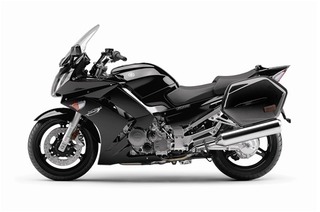
This started me thinking about looking at bigger bikes better suited to longer slab road trips. I find that the more traditional 'cruiser' holds little appeal to me, so I started looking at the 'Sport Touring' class of bikes. There aren't that many out there, so I took a few hours to check some out. It was an interesting day, but what I found was that though I think the FJR is great bike, it just fails to excite me. The scooter still does. So rather than spend the money to buy a bigger bike, I am seriously considering tweaking the scooter and keeping it until it is no longer practical to do so.
What this means is removing the charcoal canister, but also changing the exhaust, variator and adding a corsa power booster. After doing a bit of research, I think I am looking at a Polini variator. The J. Costa is tempting, but I have heard mixed reviews with the BV500, compared to the almost universally positive reviews on the GT200/GTS250's. The Leo Vince pipe has the best sound, and provides a slight improvement, and the Power Booster gets good reviews as well.
Given those changes, the only real weakness left should be the need for frequent maintenance, but that just isn't an issue when the maintenance is not that hard.
So while I did toy with the idea of moving back to a "real" bike, the convenience and fun of the scooter just makes it hard to seriously move to something like the FJR for me. But, riding remains an individual exercise and what suits me, may not suit everyone.
Ride Safe.
Stupid People and Accidents
Namely, me and my own. Complacency will eventually bite you. Last week, it bit me. Yes I had an accident, in my car. It was a classic case of assuming the person in front of you will do what you expect. Both turning right, we accelerated and then changed his mind. I accelerated behind him but I was looking back to make sure it was clear to merge when he changed his mind.
*thump*
We all know about the word assume.
What is interesting was my wife's observation later when I told her about it. She noted that she was not surprised, and that had I been on the scooter it wouldn't have happened. Her point being that, though I shouldn't, I behave differently on two wheels versus four.
That thought intimidates me a little. If I as a rider, take for granted the added safety of the cage, how can I expect non-riders to be any better? I can't, and that is a problem.
Needless to say, I am alright, the car is a little bruised but that can be repaired. But it raises concerns about the future.
The Cost Equation - Metrics that Make Sense
Since I first came to riding as transportation, I have heard the argument that motorcycles/scooters are NOT more cost effective than cars. To a certain degree, I have been willing to take that at face value. In my mind, it has always been a bit of a wash between the fuel savings and other costs, but there really isn't a way to really gauge the real difference.
The reason is that there are no metrics that makes sense when comparing cars to motorcycles. Miles Per Gallon and MSRP are the most often used metrics, but these are worthless numbers really.
Cost Per Mile
This is a metric I can get behind and work with, but what is a cost per mile? In order to figure out a real cost per mile, you need to address the myriad of costs, not just gas mileage into account. In order to give a reasonable expectation of getting a usable and consistant output number, you have to have some baselines for the metrics. The first is to decide how long the Cost Per Mile is calculated, the second is to establish baselines for average fuel costs.
For the purposes of my metrics, I went and found the US Governments listing of average gas prices over the last 18 months to get a number 2.68. For the electric vehicle I included, I used the vendor supplied estimate of .18 per charge and inflated it by 30% to .24. Next, I selected a term. Since 3 and 6 years seem to be pretty natural trade/replacement points in vehicle lifecycles, I used 3 and 6 years. The last baseline required was to establish a # of Miles Per Year guideline. I cheated here and looked at standard lease values. Normal and High are lease milages. Low is a number that seems to be about average for the recreational riding community. So we have Low, Normal and High at 6000, 12500, and 25000 miles per year.
First we have the MSRP, the purchase price of the vehicle. This cost is fixed, regardless of the miles driven so it has to be split out over the time of ownership,
Next we have the regular maintenance cycle, with oil changes. These have factory intervals, and a cost. Factor in tire change intervals and cost (seperate for front and rear), expected major service interval and cost, est fuel milage. Because insurance costs vary so widely by driver and zip code, I would like to include this number, but cannot find reasonable statistics to do so with.
Taking this approach, I can arrive at a base cost per mile using the formula:
Cost / Interval for each expense item + Fuel Milage / Cost of Fuel Unit.
From there I have a number I can extrapolate out from. Adding in a cost of additional gear and services to each vehicle for each year of ownership and adding in the MSRP / number of years to the miles driven * the base cost per mile, I get an estimated Cost Per Mile for each vehicle.
I started with my BV500. With it's service intervals, I get a Base Cost Per Mile of about $0.15. This is for all intents and purposes the 'operating cost'. Add in the $6299 MSRP and a $500 / year budget for gear and service above the expected services for 3 years, and you get a 3 year cost per milage numbers of $0.75 @ 6000, $0.44 @ 12500 and $0.29 @ 25000.
What this tells us right away is that the more you use the vehicle the better the cost per mile gets.
So what about my wife's SUV? With it's service intervals, it has a Base Cost Per Mile of $0.24. When you factor in the MSRP of 42000, it has 3 year cost per mile numbers or $2.57 @ 6000, $1.36 @ 12500 and $0.80 at 25000. Since most families keep this type of vehicle longer, if you use a 6 year number, you get $1.40, $0.80 and $0.52.
Seeing those numbers, my curiosity got the best of me. Our SMART forTwo works out to a 3Y Cost Per Mile of $1.16, $0.62, $0.37 and a 6Y Cost Per Mile of $0.64, $0.37, $0.25. A hypothetical used suburban for $5000 early 90's by KBB pricing with a 1000 / year of older car service budgeted in does better in the short term than it does in the long with a 3Y $1.07,$0.67, $0.48 and a 6Y of $1.43, $0.84 and $0.57.
Yes, there is a lot to process here, but what you can take away from it is that motorcycles actually do hold up well in terms of value, and they only get better the more miles that you use them instead of a car. But what about WITH a car?
Let's say you are a high mile person in your car, and you replace a portion of those miles with a scooter, does it still make sense? If your car is a SMART, no, it isn't even close. However, if you use a scooter enough to cut 10000 miles from your SUV's usage, the numbers start to get really close.=, especially if you talking about a smaller displacement scooter like a Genuine Buddy 150.
But where it gets really interesting is with the Vectrix. Despite it's high purchase price, the lack of regular oil changes gives it a a base cost per mile of just $0.06. It gets the same 3Y and 6Y scores or $0.81, $0.42 and $0.24. Given those numbers, it really is not out of the price line, nor is it as impractical as it might appear. The downside, is that due to it's limited range, it is almost guaranteed to be in the low side of the equation.
The harsh reality is that the math actually bears out that a scooter (or motorcycle) is a less expensive alternative to most cars as a replacement, but not as a supplement.
You can see the spreadsheet here.
Adventure Demos
This past weekend, I had an interesting opportunity. One of the dealerships in the area had the Aprilia Demo Truck in town and was doing a different kind of test ride. Since it is a sister store to the one I do some part time work at, I had the chance to go work the event. Though I could have ridden several of the bikes, I have to be honest that the weekends appeal for me was less about riding and m ore about visiting with the folks that were riding, before and after.
Generally, I think dealership test rides are too short to get a real feel for the bikes we buy. 5-10 minutes in a controlled area just doesn't cut it. With the Aprilia Adventure Rides, they are tackling that issue. Taking 10-12 riders out on an hour long test ride using a collection of demo bikes, riders get a chance to really get a feel for the bikes. I had the opportunity to visit with the riders before and after, and found that I am not alone. These rides are one of the best tools out there for evaluating the bikes.
Spending the day listening, It was fun to hear some of my own opinions echoed back at me, particularly with regards to the Aprilia Mana. If you can don't have an issue with a bike that doesn't have a clutch, there is not a more fun and practical motorcycle on the market. The other thing that I found interesting is the shop in question brought out a curiously mixed crowd and elicited some even more curious reactions.
You see, the shop is a scooter shop first. They happen to also carry Aprilia and Moto Guzzi motorcycles, but the shop is a Vespa, Aprilia, Piaggio shop first. Needless to say, most of the adventure riders came for ride the sport bikes. The RSV was a big attraction, but having folks walk through a shop filled with scooters brought more than a few comments about how much cooler the scooters where than they thought.
So perhaps exposure is the key to breaking stereotypes.
Either way, it was an excellent opportunity to meet and greet folks outside my normal circle, and for that I had a great time, working at what my wife accurately calls my 'play job'.
It may be a little longer than normal until my next post. I have been working on something for a couple of weeks that I hope to publish as my next post regarding the 'costs' of riding.
Knowing the Law
Those who have ridden for a while have come to learn that as a rule, non riders have no idea what the laws are regarding motorcycles and that many of our enforcement agencies do not know much more than the average driver. Because of this, it has become an almost standard requirement for riders to know the laws of their own area.
There are a number of laws that are vitally important to be aware of because of how they directly impact the rider in every day activities. Parking, oddly enough, is an issue that is so clearly misunderstood on both sides of the fence that has led to comical and tragic results. The misconception that a motorcycle can park in spaces that are not designated for parking is the one that seems to lead to the most problematic issues. Many non-riders assume that a motorcycle can use bicycle parking, or the left over triangles in parking areas. Depending upon your locale, this may or may not be true.
In Georgia for example, it is never legal for a motorcycle to use either of those spots. The only exception to the rule is a 'moped' which is classified as a vehicle with less than 50cc displacement, which can use bicycle parking.
Unfortunately, perception has caused a larger problem. Many drivers do not know or understand this and get upset over a motorcycle taking up an entire space, as they are legally obligated to do. Recently, that has led to some comical incidents. One of the more interesting comes from the Capital Hill area of Seattle. Unfortunately, this is not an isolated incident. As many of us know, parking on the sidewalks will result in tickets and fines. Parking in parking spaces can result in the bikes being moved, knocked over and threatened for obeying the law.
Parking is not the only area though. For many scooter owners there are other bits to be educated on.
The definition of a moped/scooter is often one of engine size, and that dictates how they are licensed and insured, but also where they can be ridden. Knowing these laws can be the difference between a day and court and a pleasant ride.
Georgia is a good example, where the law can be a little murky with regards to scooters. The short version, as summarized by the state is:
Mopeds
A moped is defined as any motor driven cycle with an engine not exceeding 50 cubic centimeters (3.05 cubic inches).
Mopeds are exempt from the provisions relating to the registration and licensing of motor vehicles.
Rules to operate mopeds on Georgia roads and highways:
1) Must be 15 years of age and have in their possession a valid driver's license, instructional permit or limited permit.
2) Must wear protective headgear (motorcycle helmet).
3) No tag is required.
4) Every person operating a moped upon a roadway must obey the same traffic laws governing drivers of motor vehicles.
5) May not use limited access highways or other roadways where the minimum speed limit is above 35 mph.
The gotcha here is the 5th bullet point. The minimum speed criteria. Georgia has no hard and fast law on minimum speeds. There is no minimum speed unless otherwise posted. But, that is not the whole story.
There is second statute that has to be understood because it articulates the minimum speed rules:
40-6-184.
(a)(1) No person shall drive a motor vehicle at such a slow speed as
to impede the normal and reasonable movement of traffic, except when
reduced speed is necessary for safe operation.
(2) On roads, streets, or highways with two or more lanes allowing for
movement in the same direction, no person shall continue to operate a
motor vehicle in the most left-hand lane at less than the maximum
lawful speed limit once such person knows or should reasonably know
that he is being overtaken in such lane from the rear by a motor
vehicle traveling at a higher rate of speed, except when such motor
vehicle is preparing for a left turn.
(b) Whenever the commissioner of public safety or the commissioner of
transportation or local authorities determine on the basis of any
engineering and traffic investigation that slow speeds on any part of
a road under their respective jurisdictions impede the normal and
reasonable movement of traffic, such commissioners jointly, or such
local authorities, may determine and declare a minimum speed limit
below which no person shall drive a vehicle except when necessary for
safe operation, and that limit shall be effective when posted upon
fixed or variable signs.
Here we have two different rules that apply in this context. The easier one is (b) which clearly defines that there is no minimum speed unless posted. The problem is (a)(1). (a)(1) provides a judgement call criteria for enforcement. It is this criteria that represents an issue for the scooter/moped rider. Knowing the above helps the rider know what is an is not legal for them to do, but also to defend their actions should it be required.
Riding as Therapy
This winter was an interesting season around here. Between strange weather, children's schedules and my own health issues, I have only put about 1800 miles on the scooter from the end of October until now. That is less than half of what I've ridden in the previous two years. The effect has been quite interesting on my behavior around the house.
I have joked about the effects of riding upon my own behavior in the past, but this is the first time that I have had outsiders take note of it. A new coworker of mine had decided that I was one of those people that just didn't like mornings (I don't). She had only worked with me this winter, with most of my days spent in the car. As the kids schedules have moderated such that I can ride to work most days again, the same coworker noticed that change and made a comment to me about it. She did not make the association with the ride, but was curious as to why I was more 'perky' in the mornings.
The only change was the ride, versus the drive.
But it brings to light something that I have suspected for a while. Riding is a form of therapy. In fact, it is many forms of therapy all at once. There is a peace in being alone on the bike. No radio, no cell phone, just you and the road (and a hundred bogeys moving to get you). The complexity of riding becomes a mental and physical challenge that engages your foreground thought processes. In doing so, you free the subconscious mind to do it's thing while you focus on the task at hand. Mix in the fresh air, the wind in your face, and the freedom of not being trapped in a cage and you get something special.
You cannot bottle this stuff. It is not available in pill form. It is better than any drug.
This is life and pleasure. It is, for me, the best way I have found of clearing the baffles between parts of my life. Getting through the typical morning a major challenge for me, as I have never been a morning person. I do not wake up well, or early. But getting through the morning with the wife and kids is important, so I do it when I can. Then I commute to work. Driving, I spend the time dwelling on the morning, or worrying about the workday. It is not time well spent. Riding however, is. It is time spent completely focused on a complex task. That of doing something that I enjoy, but also requires my complete attention.
Riding, wether it is a 50cc moped or a 1500cc cruiser, is something that has to be a primary focus activity to be done safely. That primary focus engages enough of the brain that I do not find that I have time to dwell or worry about anything but what I am doing, and what is threatening me right then. This time and focus seems to act as a reset button. By the time I get to work (and get home in the evenings), I have fully and completely switched gears. The difference is that 'perky' behavior that was noted.
Prozac is probably cheaper, but somehow, this seems like it is a whole lot more fun.
Building a new definition
From my last post, and the title of the domain that hosts this blog, I hope it is obvious that I don't view scooter riders as anything but riders.
Riding, regardless of what, is an adventure that should bring everyone that rides on two or three wheels together. It is not something that should be so divisive within the communities. Little has brought this quite as vividly to the forefront than the last couple of weeks in the ride to work blog-o-sphere. Dan's three and a half (one, two, three, and a half) part postings about the uptick in economy riders sparked some interesting debate. It also exposed some of the raw edges that seem to always be lurking within the rider community.
Even before I started riding, I was aware of the latent hostility that existed between the sport and cruiser crowds. What I didn't know was how much the choice of bike almost becomes religion for many. Being in the technology industry for 20+ years, I should have expected it, but I did not.
In the technology world, we refer to the arguments of platforms and tools as religious flame wars. Where millions of words of invective have been directed at other solutions from the the 'chosen' solutions. The one that most casual people are the most familiar with is generally the Mac versus Windows arguments.
It is an argument that no one 'wins'.
That is how I view much of the argument between riders over what is a 'real' bike and the disparaging comments against bike that are not like theirs.
When I started Two Wheel Junction a couple of years ago, it was with the intent of building a community focused on the simple fact that regardless of what we ride, we all share the same risks and reap the same rewards. Even the 'economy rider' can understand the rewards. Unfortunately, I have never had the time to make it into what I want it to be, a resource for all riders, regardless of type of bike.
Little did I know at the time, that the Junction part of the name would come to play such a big part in my view of riders. A couple of years ago, Steve Williams wrote a great piece about riders versus owners. In it Steve makes the point that there are people that buy an item to use, while other buy it almost as a trophy. What I find, is the mentally, I find myself taking the analogy a step further.
People either define themselves by the way they live, or they define themselves by what they possess.
In my own casual observations, I have come to the unwelcome conclusion that the former are greatly outnumbered by the later in terms of the volume of what is said in the world, with a vocal minority of people that feel the need to defend their choices when in later category.
I like to think that I fall into the former category. I am not a person to buy or own 'status symbol' things, though I have been known to buy things purely on a want basis. I think my SMART car falls firmly into that category. I didn't need it, I had a car that ran, though it got crappy gas mileage and I did not enjoy driving it. I bought the SMART because I wanted it, more than it made sense. I may have justified it as saving gas and being able to park it in the sam garage spot as my scooter(s), but the truth is, I wanted it. I've been told a couple of times by a neighbor that he doesn't understand me. Between the scooters and the car, I could obviously afford a nice car, so why do I choose a scooter and microcar. I do not have a ready explanation for him that he can understand.
To understand the relationship, you need a little background. We both work in the same industry, computers. We are both programmer's (Systems Analysts). He writes code for Windows, using Windows. He works for someone else. I write code for Windows (and the Mac), using a Mac. I work for myself. Though I don't know for sure, I would guess that our income is pretty close. He is a guy that drives a new Mercedes that he trades every 2 years, dresses almost exclusively in designer names, wears Armani sunglasses and a Rolex watch. If he owns it, it's the best he can buy, and image is very important to him. I on the other hand am at the other end of the spectrum. I ride a scooter or drive the SMART (my wife drives a 5 year old Dodge Durango). If I own a designer name, it was a gift. I live in jeans (primarily Levi's 501's from Kohl's or Sears whenever they run a good sale), and t-shirts. I think I've got a couple of cheap Fossil watches, I don't wear them.
We both own bikes. Obviously, I have my BV500. He has a restored (by someone else) Harley Davidson Panhead that he rides occasionally, on the weekends, before he wipes it down with a cloth and parks it. I don't think it's ever been wet. It *is* gorgeous. To him, it is a trophy to show off to friends. To me, it is a tool, like a camera, or a computer. It exists to be used, and abused.
And that, is the distinction. People that buy bikes to ride them are the riders, they chose to define themselves by the act of riding. In some cases they are also fiercely loyal to the type of ride, but it is done in a different way.
To a degree, this means that the so called 'economy riders' that sparked so much of this thought process are without question riders. That places even more burden upon the rest of the riders to work with them to learn safety as a part of the riding experience. Unfortunately, there are many more owner than riders. That means that it is even more important to emphasize safety and awareness.
With that in mind, it would seem that the riders need to regroup and plan to use this summers riding season to help spread the word. Organizations like Ride to Work and their annual Ride to Work Day (June 15), need our non-partisan support and participation. This means actively engaging not only the other riders we know, but the cage drivers and the owners to spread the word, not only that we are out there but also about the rewards we reap, and the risks we take and mitigate.
Because, no one is going to do this for us. It is on our shoulders to make the roads a better and safer place for all of us, the riders.
Different Directions
Rather than talk about me and my own riding on this bitterly cold and icy Monday morning, I want to take a day to talk about something that has been percolating in the back of the brain for a few months, and that is, should those of us riding what has ben traditionally referred to as a scooter start thinking and representing what we ride differently?
The reason being, is that the lines between what is a scooter and what is a motorcycle are becoming increasingly blurry. As a trend, I do not see this reversing either. Impacting the issue even further is an increasingly different view of scooters by the rest of the motorcycling community.
Wikipedia defines a scooter as:
Scooters are two-wheeled motor vehicles that have evolved from their classic roots combing a step-through frame, small wheels (10" to 16" in diameter), and rear swingarm-mounted engine suitable for light duty — to a broad range of modern designs that include step-through as well as step-over frames, small or large wheels, front fairings or floor boards, and manual or automatic transmissions — suitable for a range of duty from urban to highway.
Using that definition, the scooter line is pretty clear cut. Or is it?
I think we can all look at the Geniune Stella product and agree that it is a scooter. It is for all intents and purposes a vintage Vespa P series that just happens to still be manufactured as new.
But what about other modern designs that share very little with the scooter roots of the swingarm mounted, single cylinder engine?
Pictured here is a Piaggio X9. It is a modern design, that while it retains the spirit of the scooter in it's design, it is built like a motorcycle with a tubular frame, larger wheels, and a 500cc engine capable of running at highway speeds all day long.
Does this X9 really compete in the same space as the Stella as a "Scooter"? This isn't even the largest example, with a Suzuki Burgmann using a v-twin 650cc engine, and in Europe, the Gilera GP800 with an 850cc v-twin.
Once you get into the 250+ engine sizes, is it really fair to categorize these vehicles as scooters? Within the scooter community, this is a question that comes up alot, with some clubs not welcoming the so called "maxi's".
I think that if that was the only blurring of the lines, then the question would not be here, but it is not the only blurring.
The other distinction usually applied to modern scooters is that they are 'twist and go'. Meaning, there is no clutch or gears for the rider to operate. Many of the more traditional motorcycle riders have taken a dim view of the TnG riders as not being "real bikes". Today though, we see those lines blurring as well. In the last 18 months we have seen two major motorcycle manufacturers bring the Twist and Go designs to traditional motorcycle designs.
The Honda DN-01 being the more expensive and more luxurious of the two, it also carries a steep price tag. But it has a distinctively motorcycle look and ride quality, with all of the convenience of a maxi scooter. Is it fair to say that this bike and a high end Burgmann Executive are competing for the same customers?
I think it would be an accurate assessment, but even more to the point, which bike would be more readily accepted by other motorcycle riders? Which would be readily accepted into a scooter club?
Aprilia also jumped into this marketplace, with a very different entry in the Aprilia Mana 850. As you can see, the Mana is visually a naked sport bike. It's ride quality is that of a sport bike, and yet unlike a traditional sport bike, it has storage for a helmet hidden in that 'fuel tank'. It is also a "Twist and Go" where even in it's Manual Mode operation, there is no clutch, and the electronically managed CVT transmission will not allow the rider to over rev the engine, nor will it stall out if the riders fails to downshift.
Both of these are 'motorcycles' by definition, yet they share as much with the larger scooters as they do with a motorcycle heritage.
Adding to all of this confusion is the advent of a a growing group of sportbike riders t
hat have discovered the joys of small displacement sport scooters. These are folks that have spent hours, and in many cases hundreds of hours on the track and in the mountain roads riding 600 and 1000cc sport bikes right up the ragged edges of traction at unsafe speeds. The risk has started to outweigh the thrill when they discover a new attraction. The skill required to ride on the ragged edge of traction, power and weight is the same regardless of the speed an engine size. With that discovery, these riders are adding 50cc scooters like the Aprilia SR50, or the Kymco Super8, or even the Genuine Rattler at 110cc, and riding these in those same environments. Discovering that even with such small displacements, these are sport bikes of another type, where riding on the ragged edge of power, weight and traction means that they are flying around corners at a blazing speed of 35mph.
As I have heard it described by several of these people, there is a thrill in pushing the limits, but still being 5-10mph under the speed limit. Or to be more blunt, "there is nothing like coming around a corner with the throttle wide open, a knee on the ground, with your ass on fire just to have the same cop that would have thrown you in jail on your sportbike just look at you and laugh".
I am certain that to some this sounds irresponsible, but these riders are doing this in full track leathers. Yes, full track leathers on a 50cc scooter.
But this just continues the trend of blurring the lines. Scooters have left the realm of the old school, and moved into an area that makes the old definitions behind. Though I think of my BV500 as a scooter, I am really beginning to question if that's accurate. I ride with a mixed group of cruisers, maxi-scooters, sport bikes, sport tourers and vintage scooters. While the maxi's are comfortable within the range of riding of all of these groups, they don't really fit in with any of them, while they don't stand out like a sore thumb either.
In the car industry, the term crossover has become quite popular. Sometimes, I wonder if that's not what we are seeing today. You could legitmately put the big maxi's and the automatic motorcylces into a group that is in between scooter and motorcycle and call them crossovers. It make's you wonder. How long until we see a CVT based Ninja 250 with pricing that competes with the 250cc scooters? How does a bike like that fit into the scheme of the marketplace? How would it be accepted?
The New Kind of Rider Debate?
Dan over at Musings of an Intrepid commuter has a good summary of an issue that I think most of the scooter community already knew about.
The Economy Rider
These are the folks that are not, and do not want to be, associated with any of the existing community. They bought the cheapest scooter they could find and they use it because of it's economy. To them it is just a motorized bicycle, and as such requires nothing more than what a bicycle does in terms of training and safety.
Dan makes some great and coherent points, but there is another side of this that, to my mind is even more destructive.
These riders are encouraged by the media and the retailers. First, every time we get a good gas price spike, we have the media outlets out there showing scooters and talking about the benefits, but rarely do they talk about the fact that these things ARE motorcycles.
Since 2006, this video is pretty much a staple in the scooter communities to underscore the issue. Take a moment to go watch it. It is the end of a live segment in Chicago talking about how great scooters are for gas and the usual fluff. At the end of the segment, where this video begins, we have the reporter hopping on with a helmet, no gear and no training. Do we need to see the video to know she is going to hit the pavement? not really.
None of this changes the fact that every year, we get the same fluff pieces, and a new crop of people that buy a scooter under these pretenses. Complicating the problem is the people selling them. Not the reputable scooter shops. Not the motorcycle shops. They are preaching safety and responsibility, but they aren't the ones selling to this group of riders, and that is the root of the problem.
These riders are not buying from the bigger, reputable shops, they are buying from Pep Boys, or similar vendors that are putting super cheap chinese built products that are questionable at best. They are sold by people that know nothing about them, and do not care if they are educating the customer to be safe.
Unfortunately, it is not a problem you can readily address, and it is a problem that continues to be a growing problem in the scooter communities, particularly as these owners get the passion. I have seen them show up at scooter events, wearing flip-flops, shorts, t-shirts and not even DOT certified helmets and get very offended when some proper gear is suggested. "It's just a scooter".
Dan is right, it is a problem, but I'll be darned if I have a solution.
About the Mileage Thing
In answer to the question about the mileage, it is just a picture of the mileage starting point for the year as a bit of a reminder to myself and for a couple of friends who have done the same. We are all seeing just how many miles we really ride, just for fun. The funny part is that though the BV500 is newer than both the BMW GS R1200 and the VStrom DL-1000 that the friends ride, it has more miles to start this year :-).
Back in the Saddle (Literally)
Like so many riders, sometimes, convenience wins over the desire to ride. Then convenience becomes habit, and the old cycles begin again. That's where I was his fall. Between being the kids taxi and some odd weather, I found myself running around in the cozy coupe (my SMART Car) more than on the scooter. Interestingly, some of the old frustrated driver personality quirks started to reemerge.
So with the new year I've been back on the scooter more often than not, and it feels good. The only problem, the weather has remained really strange (it was 25 on the way to work today, with highs of 33, and the home commute should be back in the low 20's). That hasn't really stopped me, but it has made me reevaluate some gear I have.
One thing that this hammers home though. I really enjoy riding in the cold. There is a different feel to cold weather riding. This is mildly entertaining, since I do not generally enjoy being cold.
Anyway, before the holidays, I got to add a Scala Rider headset with Bluetooth and MP3 to my kit. Personally, I am not one to talk on the phone, nor listen to music while I ride. Both of those seem to defeat the purpose of riding. But I do enjoy the intercom between rider and passenger or rider to rider when I ride with a friend. The Scala had good reviews, so I went with it. While it is configured with my phone, I have answered two phone calls on it, both kept VERY brief. Even with those brief usages, I see the convenience. I cannot see the appeal. Talking on the phone is a distraction that just is not needed on two wheels. That said, the sound quality is good, and the usability is very good.
The other toy I got to play with was the Sym CityCom 300. After riding it, and it's stable mate, the Sym RV250 I am impressed.
The Sym CityCom has a great underseat storage in which my 17" laptop bag fits comfortably. A lot of nice design elements and features (I hope to have a full review posted in the coming weeks) make for a great suburban commuter. Compared side by side to the RV250 though, it is a tough choice. Both have great ride qualities, the seating on the RV250 is a touch more comfortable particularly for shorter riders, while the CityCom has excellent storage. Both have distinct aesthetics. Despite different engine sizes, the performance is remarkably close. Choosing between the two would be very very tough if I were in the market, but I think for me, the CityCom would be the winner.


View Comments